Post-Ambush Repression and Searches in Santiago
My Tender MatadorPost-Ambush Repression and Searches in Santiago follows the city’s rapid transformation after an attack on Augusto Pinochet’s motorcade in September 1986. The Queen of the Corner first encounters the upheaval as a theatergoer returning to streets under military scrutiny; by night, Santiago is subject to house-to-house searches and a military siege. The crackdown turns public uncertainty into personal peril, ultimately forcing her to leave the home that had sheltered Carlos and his associates.
The Attack Becomes Public News
The repression reaches the Queen while she is inside a downtown movie theater. When she emerges, the Plaza de Armas is nearly deserted, patrol cars flash across the square, buses carry people through emptied streets, and helicopters survey the city. At checkpoints, authorities search people’s pockets and purses. The contrast between the theater’s enclosed fictional action and the altered streets outside makes the Queen’s absence from the unfolding crisis itself consequential: she must piece together events from fragments of public rumor.
On a crowded bus, she hears conflicting reports: there has been an ambush; Pinochet may have been killed, wounded, or escaped; seven bodyguards are reported dead; and the attackers are said to be the Front. An older passenger tells her that Pinochet survived without a scratch and that every guerrilla escaped. These are presented as street talk rather than an official accounting, but the Queen’s relief that the attackers got away is unmistakable. The bus is then stopped, and passengers are ordered off one at a time to be searched, turning rumor into an immediate encounter with state power.
Lockdown and the Spread of Fear
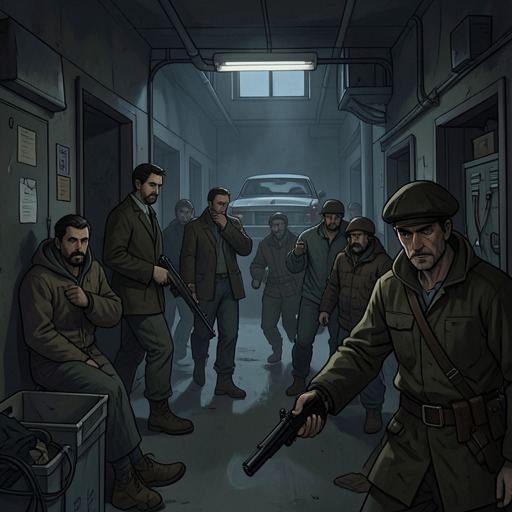
That September night, Santiago is described as a city under siege. The army occupies the capital and blocks roads leading in and out; soldiers search cars, houses, and whole neighborhoods. In poorer districts, doors are forced open and residents may be made to stand through the night in football fields. People can be beaten and loaded into trucks on the slightest pretext. The response to the attack therefore extends beyond the motorcade and its assailants: suspicion makes entire neighborhoods vulnerable.
The Queen cannot sleep. She jumps at noises in the house and keeps a kettle ready in case Carlos or his friends arrive, while a low radio broadcast supplies the latest information. Radio Cooperativa relays the Undersecretary of the Interior’s appeal for citizens to stay home, remain vigilant, and report anything suspicious. The official language of public safety sits uneasily beside the account of searches, arbitrary punishment, and fear. Radio listening, a familiar domestic routine, becomes one of the few ways she can follow events while waiting for news.
This atmosphere has roots in the ordinary political life of the neighborhood. Earlier, its grocery store had served as a gathering place for discussion of demonstrations, opposition declarations, threats from the Dictator, and calls to action for September. The Queen had also heard about the anguish of families searching for loved ones: women sought news, carried photographs, and protested outside the Ministry of Justice. That history gives the post-ambush searches a wider human context. The Queen’s fear for Carlos unfolds in a city where state violence and the uncertainty surrounding the detained and missing are already part of public conversation.
Rumor, Concealment, and the Queen’s Exposure
Before the attack, neighbors had speculated about the packages and boxes entering and leaving the Queen’s house, and about the bearded men meeting in a room on the roof. She had heard their gossip but pretended not to care. Later, a government communiqué announces that a subversive plan scheduled for September has been uncovered and that measures have been taken to prevent violence. Although she dismisses the warnings, the report leaves her worried and eager to hear more from Radio Cooperativa. The gap between official announcements and her private knowledge makes her position increasingly precarious: the home that appears to neighbors as a source of gossip is also connected to clandestine activity.
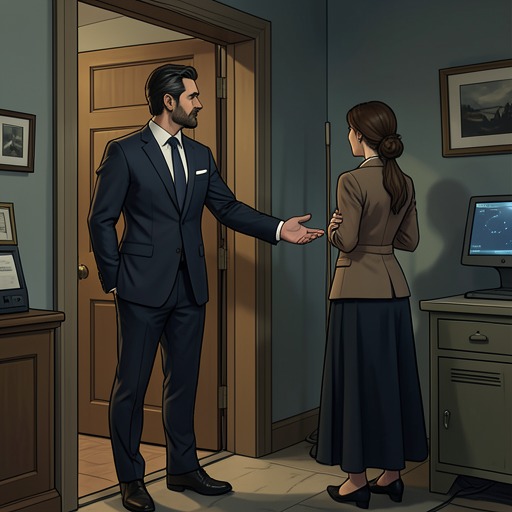
After the searches begin, Laura arrives disguised with thick glasses and a scarf. She tells the Queen that Carlos cannot come, but is safe, and that the Queen herself is in danger. Other safe houses have already been searched; hers is expected to be next, and the secret police may arrive within hours. Laura insists that leaving Santiago is necessary both for the Queen’s safety and for everyone else’s, since another arrest could expose the others. The Queen protests that she cannot simply abandon her house or disregard its owner. Laura rejects this as a matter of life and death, and makes clear that departure is not a request but an order.
Evacuation and Loss
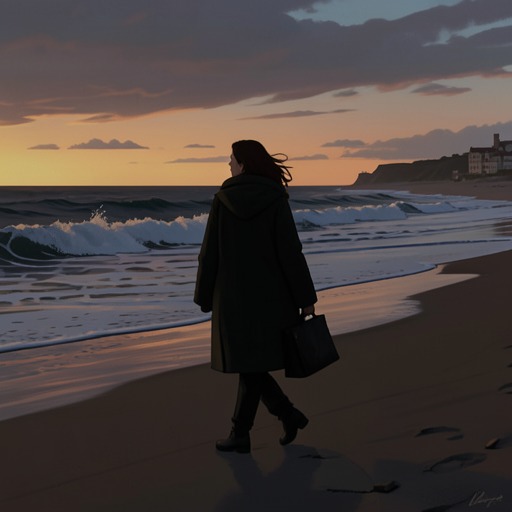
At dawn, the Queen’s three-story corner house has become a lifeless cavern. During a sleepless night, she burns papers bearing telephone numbers and addresses, sweeps away footprints, washes windows, and dusts surfaces to remove traces of herself. These careful acts show the search’s reach before authorities even arrive: the threat makes her treat her own home as a place that must be stripped of evidence. When morning comes, her possessions are packed into two bags, and she goes up to the roof to look toward the gray horizon.
The crackdown thus culminates not simply in searches but in the Queen’s removal from the home that had anchored her neighborhood life and sheltered people connected to the Front. She leaves with her safety and the network’s security placed above her attachment to the house, yet the departure is marked by the prospect of separation from Carlos. The Queen’s evacuation gives the military response an intimate consequence: a citywide operation becomes the loss of a particular home, familiar surroundings, and the chance to see him again.
Narrative Significance
The episode interweaves public information, street rumor, and private apprehension rather than offering the citywide response as a detached report. The bus passengers’ uncertain accounts, the radio’s official announcements, and Laura’s urgent warning each provide a different kind of knowledge. Their sequence moves the Queen from incomplete news to a direct recognition of the danger facing her.
The clock-marked parallel action surrounding the attack also frames the aftermath as a convergence of separate lives. While Pinochet’s motorcade is attacked, the Queen is in a theater, absorbed in a screen action that becomes entangled with her image of Carlos. When she returns to the city, the real consequences arrive through empty streets, searches, and the news that the attackers escaped. The resulting irony is not that the crisis is unreal, but that the Queen encounters it first through mediated images and fragments, then finds herself compelled to act within it. Her departure makes visible how political repression reaches beyond its stated targets and reshapes the daily choices of those caught in its networks.